
Research Brief Explores How a Conditioned “Scalar Room” May Influence the Experience of Meditation
A research paper listed by Harmony WA examines how a conditioned “Scalar Room” environment may affect the experience of meditation. The topic highlights a practical question for consciousness and wellness research: can a structured field-based space measurably influence relaxation, focus, inner awareness, and meditative depth?
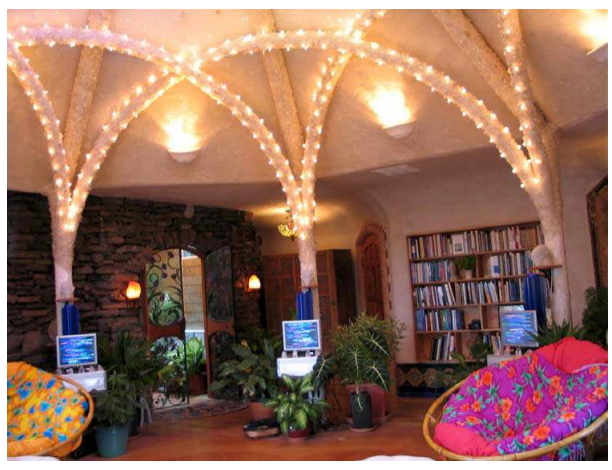
Meditation research is moving beyond one question—“Does meditation work?”—and into a more interesting one: WHAT CONDITIONS HELP PEOPLE ENTER DEEPER STATES OF STILLNESS, FOCUS, AND SELF-AWARENESS?
A research paper listed by Harmony WA, titled “The Effects of a conditioned space ‘Scalar Room’ on the experience of meditation,” explores that question through the lens of a conditioned room environment associated with scalar-field concepts and Energy Enhancement System-style technology.
Rather than treating meditation as only a personal practice, the paper’s topic invites a broader research conversation: how might environment, field exposure, intention, and relaxation conditions shape the depth and quality of a meditative experience?
WHY THIS RESEARCH QUESTION MATTERS
Meditation is often studied through brain activity, stress response, heart-rate variability, emotional regulation, and subjective experience. But the environment where meditation happens is sometimes treated as background.
This research focus puts the environment in the foreground.
If a conditioned “Scalar Room” is claimed to support deeper calm, clarity, or meditative access, then the next step is to ask what can be measured before, during, and after exposure. That makes the topic more than a wellness claim—it becomes a research pathway.
THE ROLE OF THE CONDITIONED SPACE
A conditioned meditation space is not simply a quiet room. In this context, the “Scalar Room” is presented as a deliberately structured environment intended to support a more coherent internal state.
For researchers, the key question is not whether the room feels different. The real question is whether that difference can be documented through consistent outcomes, such as changes in relaxation depth, perceived mental clarity, nervous-system regulation, EEG patterns, or meditation-quality scores.
MEDITATION AS A MEASURABLE EXPERIENCE
Meditation is personal, but it can still be studied. A strong research model could track both subjective and objective markers, including:
SELF-REPORTED MEDITATION DEPTH
Participants can rate calmness, clarity, emotional release, focus, and perceived ease of entering a meditative state.
PHYSIOLOGICAL REGULATION
Heart-rate variability, breathing rhythm, skin conductance, and sleep-quality trends can help show whether the nervous system is shifting toward balance.
BRAINWAVE ACTIVITY
EEG can be used to explore whether the experience correlates with changes in alpha, theta, or coherence patterns often associated with meditative states.
REPEATABILITY
The most important question is whether similar results appear across different participants, sessions, and locations.
WHY THE STUDY IS ENGAGING
What makes this research topic compelling is that it sits at the intersection of meditation, consciousness studies, field-based wellness concepts, and measurable human experience.
People often describe meditation spaces as peaceful, charged, sacred, or deeply calming. This line of research asks whether those reports can be studied in a structured way—and whether a conditioned room environment can help people access deeper states more consistently.
WHAT STRONGER FOLLOW-UP RESEARCH COULD LOOK LIKE
To move this field forward, future studies should focus on disciplined measurement and replication. A stronger next-phase protocol could include:
STANDARDIZED SESSION CONDITIONS
Same room setup, session duration, participant preparation, lighting, sound level, seating, and meditation instructions.
CONTROL OR COMPARISON ROOMS
Matched meditation sessions in a non-conditioned room to help separate the room effect from expectation, rest, or quiet time.
BLINDED DATA REVIEW
Independent reviewers analyzing EEG, HRV, or survey results without knowing which session condition was used.
PRE-DEFINED OUTCOMES
Clear primary measures selected before the study begins, such as meditation depth score, HRV change, EEG coherence, or stress reduction.
MULTI-SITE REPLICATION
The same protocol repeated at different locations to determine whether the findings are consistent beyond one room or one practitioner setting.
THE BIGGER RESEARCH OPPORTUNITY
The value of this research topic is not only in whether a “Scalar Room” produces measurable effects. It is also in how it challenges researchers to better understand the relationship between environment and consciousness.
If certain spaces reliably help people relax, focus, and access deeper meditative states, that could open meaningful new research questions for wellness centers, meditation practitioners, integrative health researchers, and consciousness studies.
IMPORTANT CONTEXT
This article discusses a research topic and should not be interpreted as medical advice, diagnosis, or proof of treatment efficacy. Claims involving scalar-field environments, meditation enhancement, or health-related outcomes require controlled research, transparent methodology, and independent replication.
Categories: Sciences, Educational Technology, Healthcare Technology
Tags: Consciousness Studies, Meditation Research, Wellness Research
Just Going Viral
Founded by Hon. Dr. Sandra Rose Michael, DNM, DCSJ, Energy Enhancement System, LLC is a Nevada-based research and technology company dedicated to the responsible exploration of scalar-field and photonic energy phenomena. The company's mission is to p