
How Scalar Fields Are Generated and Maintained in EESystem™ Devices
EESystem™ devices generate scalar fields using electrostatic and magnetostatic principles. Electrostatic fields arise from distributed charges, while magnetostatic fields come from currents through conductors. By coupling these fields, EESystem™ devices control charged particles, enable energy conversion, and support advanced applications like wireless power. Maintaining scalar fields requires careful management of power, temperature, shielding, and interference to ensure stability, efficiency, and safe operation over time.
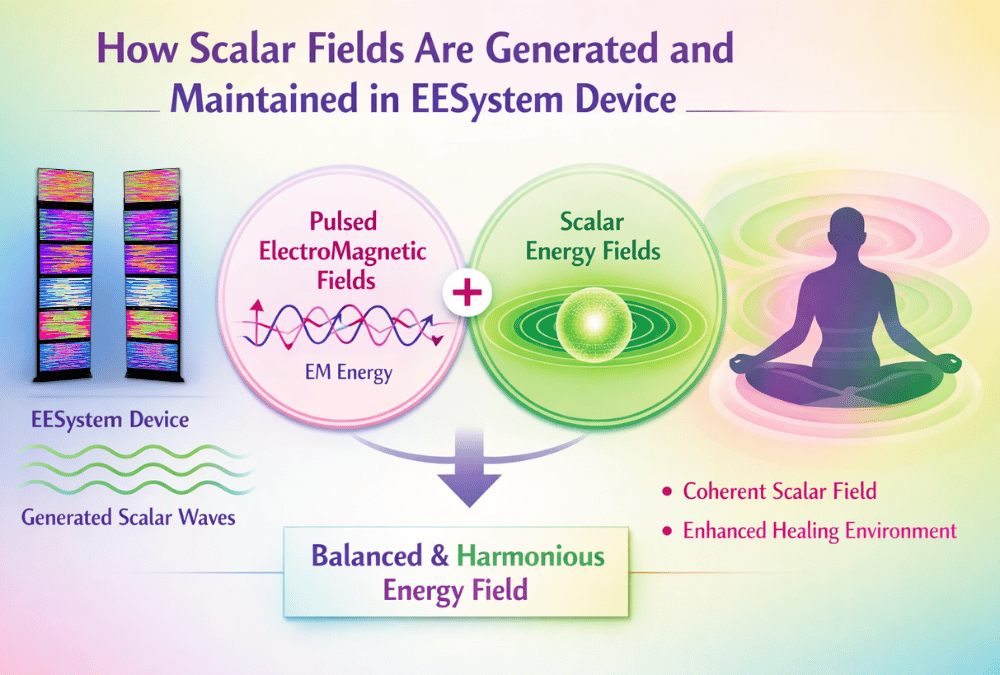
How Scalar Fields Are Generated and Maintained in EESystem™ Devices
Scalar fields in electrical and electronic EEsystem™s arise from electric charges and flowing currents. You can generate electrostatic fields by distributing charges, while magnetostatic fields come from passing current through conductors. Combining these coupled scalar fields enables precise control over charged particles, electromagnetic induction, and energy conversion. To fully harness the potential of scalar fields, you'll need to carefully manage practical considerations like power constraints and thermal management. Exploring further will reveal how scalar field design opens up advanced EEsystem™ capabilities.
Fundamental Principles of Scalar Fields in EESystem™s
Scalar fields play a fundamental role in the operation of electrical and electronic systems. They arise from the distribution of electric charges and currents within a device, creating regions of varying potential energy.
These fields influence the behavior of charged particles, guiding the flow of electricity and enabling indispensable functions like signal transmission and energy conversion. Understanding the principles governing scalar fields is essential for designing efficient and reliable EEsystem™s.
Factors like geometry, material properties, and operating conditions determine the field's characteristics, which engineers must carefully optimize to achieve desired performance.
Electrostatic Scalar Fields: Generation and Maintenance
Electrostatic scalar fields are generated whenever electric charges are present in a system. These fields arise from the interaction between the charged particles and their surrounding environment.
To maintain an electrostatic scalar field, you must continuously supply energy to the system, either through external sources or the rearrangement of charges. The strength and shape of the field depend on the distribution and magnitude of the charges.
Magnetostatic Scalar Fields: Creation and Sustenance
Magnetostatic fields are created whenever currents flow through conductors. These fields can be harnessed to generate scalar fields within EESystem™ devices.
Passing current through coils or solenoids produces a magnetostatic field. The field's strength depends on the current, number of coil windings, and core material. Alternating the current generates a time-varying magnetostatic field.
Strategically arranging conductors and magnets allows tailoring the magnetostatic field. Shielding techniques maintain the desired field while isolating external influences.
Integrating magnetostatic and electrostatic scalar fields enables sophisticated control over energy and information transfer within EESystem™ architectures.
Coupled Scalar Fields: Interactions and Applications
Harnessing the interplay between electrostatic and magnetostatic scalar fields reveals a world of possibilities within EESystem™ devices. These coupled fields can manipulate charged particles, generate electromagnetic induction, and facilitate energy conversion.
By carefully designing the geometry and properties of these fields, you can achieve precise control over particle trajectories, power transfer, and signal processing. The interactions between scalar fields open doors to advanced applications like particle accelerators, magnetic levitation, and wireless power transmission.
Exploring the dynamics of coupled scalar fields is key to exposing the full potential of EESystem™ technology.
Practical Considerations for Scalar Field Management in EE Devices
Effectively managing scalar fields in EE devices often requires careful consideration of practical factors. You'll need to account for power constraints, thermal management, and electromagnetic interference. Optimizing field generation and containment is pivotal to minimize energy losses and unwanted interactions.
Thoughtful component placement and shielding strategies can help mitigate these challenges. Calibration and monitoring procedures are also essential to maintain field stability and consistency over time. By addressing these practical realities, you can access the full potential of scalar field technologies in your EE devices.
Frequently Asked Questions
How Do Scalar Fields Differ From Vector Fields in EESystem™s?
Scalar fields represent a single value at each point, while vector fields have a magnitude and direction.
In EEsystems™, scalar fields are often used to model static quantities like electric potential, whereas vector fields describe dynamic quantities like electric and magnetic fields.
What Are the Safety Concerns With High-Intensity Scalar Fields?
You should be wary of high-intensity scalar fields as they can pose serious health risks, including tissue damage, cellular disruption, and potential long-term effects on the human body.
Proper shielding and safety protocols are essential when working with these powerful fields.
Can Scalar Fields Be Used for Wireless Power Transmission?
Yes, scalar fields can be used for wireless power transmission, though there are safety concerns with high-intensity scalar fields that you'll need to address. You'll have to carefully design the system to avoid potential health risks.
How Do Temperature and Humidity Affect Scalar Field Maintenance?
Temperature and humidity can impact the maintenance of scalar fields. Higher temperatures and moisture levels may disrupt the field, causing instability and reduced power transmission efficiency.
Meticulous environmental control is essential for reliable scalar field performance.
Are There Any Biological Effects of Long-Term Scalar Field Exposure?
Long-term scalar field exposure can have biological effects, like altered brain activity and sleep patterns.
You may experience headaches, fatigue, or mood changes. Consult a healthcare professional if you have concerns about your exposure.
Conclusion
You've explored the fundamental principles underlying scalar fields in electrical and electronic systems. From electrostatic to magnetostatic fields, you've delved into their generation, maintenance, and the intriguing coupled interactions. To effectively manage scalar fields in EE devices, you must consider practical factors that ensure optimal performance and reliability. Applying this knowledge, you can harness the power of scalar fields to enhance the capabilities of your EEsystems™.
Categories: Wellness
Tags: #EESystem™ #EnergyEnhancementSystem™ #ScalarFields #EEDevices
Just Going Viral
Founded by Hon. Dr. Sandra Rose Michael, DNM, DCSJ, Energy Enhancement System, LLC is a Nevada-based research and technology company dedicated to the responsible exploration of scalar-field and photonic energy phenomena. The company's mission is to p